
Perfect Books for Moms

A Brief Overview of What Makes for a Great Mother’s Day Book
Mother’s Day is a time to celebrate the often-unrecognized hard work mothers do every day. While the date varies by country, the United States (and most others) celebrate it on the second Sunday of May. This celebration is not limited to mothers and includes grandmothers and all the maternal figures out there.
The first Mother’s Day was celebrated in 1908 at a church service in Grafton, West Virginia. President Woodrow Wilson made it a national holiday six years later. Anna Jarvis was the activist who advocated for the holiday in honor of her late mother, Ann Jarvis. Ann was a champion for women during her life, and her daughter continued her legacy. More than 100 years later, Mother’s Day is still considered an important day for many.
On this special day, people often buy the mothers in their lives gifts. Many will opt for flowers or chocolates, but some prefer more long-lasting items. Books are a great gift option for mothers who enjoy reading. Before you buy a book for the mother in your life, put thought into your selection. This article will discuss some considerations you should take when buying a Mother’s Day book.
Searching by Genre
One of the most obvious things you can consider during your book search is the genre. Take your mother’s favorite genres into account. While this is not a guarantee she will like this new book, it is a good start. You can even look a little deeper into the subgenre or subject matter of the book. It makes sense to think of new releases or bestsellers of a genre you know she likes.
You can either shop for books in person or online. However, browsing physical bookshelves is the more personal option. Specifically, specialty bookstores can kickstart your search. You will be able to hold the book in your hands before you buy it. A book might catch your eye, or you might be drawn in by a blurb. If a physical bookstore is not an option, you can still shop online. There are seemingly countless new books published every day, so you are bound to find a suitable option.
For a catalog of family friendly books that mothers can share with their children, check out Cloverly Children’s new releases.
Searching by Author
People are often loyal to their favorite authors. Whether it is their writing style or subject matter, it can be comforting. An obvious starting point for finding the perfect Mother’s Day book is looking at your mother’s favorite author. Keep track of their new releases or older books your mother might not have read. Your mother might already have a new release from the author, so always include a gift receipt.
Finding Something New
Sometimes, giving a book as a gift can be an opportunity to broaden someone’s literary horizons. One example is finding an author with a similar style to her favorite. That can be a familiar ramp to reading a vast array of new books. You can also stretch out beyond the genres you know she likes and actively reads.
Always be aware of the content or subject matter of the book, but it can become her new favorite. You do not want your gift to cause an awkward stir. There might also be some genres that you know she does not like. It might also be beneficial to make this book on the shorter side. An overly long book of unfamiliar subject matter can be offputting.
Relating to Your Mother Through Books
Getting an unexpected gift can be one of the most personal interpersonal experiences. As long as care is put into it, it shows that you have a sense of who the person is. When it comes to your mother, you have known her your entire life. You should know her better than anybody. Use your lifelong relationship to explore new literary avenues. This can be another way to connect and bond with your mother.
There are many different types of unique books to buy for your mother. For example, you can buy a travel book or fictional story set in an upcoming vacation. This can build her excitement for the trip. You can focus on any upcoming life event that she would be interested in learning more about.
Never feel constrained by societal norms when buying a book for Mother’s Day. Your mother is probably one of the closest people in your life. Any gift you give her will be embraced, but she will appreciate it even more if it is useful. Mother’s Day is the best time to show the mothers in your life what they mean to you.
The Important Role of Your Book’s Setting

How to Build Your Book’s Setting from the Ground Up
Every book, fiction and non-fiction, has a setting that orients the reader. The most common way to define setting is the physical location of the story and the time it takes place. It is a combination of time and place that establishes the world of your book. Some of the most acclaimed books are remembered for their settings.
When you are writing your book, you have to put thought into the setting. The more you think about your setting before writing, the more the reader will become immersed. Building your book’s setting starts from the outlining process and continues until your final round of edits.
As a general rule, the more effort you put into your book will create a stronger book. This article will discuss the basics of building your book’s setting throughout the publication process.
The “When” of Your Setting
One part of the setting of your book is the time in which the story takes place. This situates the reader in the proper time period of your story. Without saying otherwise, the baseline assumption for most fiction books is that the story is modern day. Other types of literature can have different assumptions. For example, autobiographies or memories have to take place in the past by default.
Always make sure that if the time period of your story is important, you make it clear to the audience. If you do not make the time period clear, your readers will be confused, especially when writing for children. Characters’ actions and dialogue have to match with the time of your book. There are exceptions to this, such as when the book is comedic or intentionally historically inaccurate. Any references in your book should match up with the time period as well.
If you are juggling multiple time periods, make that apparent to the reader as well. Without coherent writing, you can lose your reader’s interest. You should also make this clear to yourself from the start of your writing process. You can include years and time periods right in your initial pre-draft outline and storyboards.
The “Where” of Your Setting
The other component of your setting is the physical location of your story. This is crucial in helping the reader understand the world of your book. While reading, knowing the locations in your story allow readers to picture the action from start to finish. If a reader cannot picture the details of your story, they may become disengaged while reading.
As with the time of your setting, you should plan the physical locations from the start. Your outline is a great place to start nailing down the details of your book’s locations. When you have this established early on in the writing process, you can draft with ease. You will be able to write knowing full preliminary details of your setting. It could even be helpful to draw a small layout of any significant locations and write within those barriers. Nothing is set in stone until it is published, but planning can make the process smoother.
Historical Settings
Sometimes, you may want to write a book featuring a historical setting. This can be any material set in the past, often in real-life locations. For example, you may write a historical fiction about the Revolutionary War or a biography of a prominent historical figure.
When writing a book based in history, you want to make sure your writing always makes sense. You should know about the setting you are writing to and plan accordingly. Research necessary details if you are unsure of any part of the setting. Try to write within historically accurate boundaries to make the story as immersive as possible.
Autobiographical Settings
If you are writing an autobiography or memoir, the settings of your book will be personal to you. While you know the details of your life, your reader does not. Make sure you properly convey any important elements of the time and place of your life story. The goal is for the reader to become immersed in your story and not have clarifying questions.
You never have to write and publish alone. There are always resources available to authors to ensure that their writing is clear and professional. The more work you put into your book, the stronger the finished product will be. When you publish with Cloverly Children’s, you will have a designated project manager to guide your writing journey.
ABCs of Book Formats
Reviewing the Formats in Which Your Book Will Be Published
When you write your book, the binding is likely not at the front of your mind. You have been so invested in the writing process that it is surreal to see it in print. You will hold the fruits of your labor in your hand.
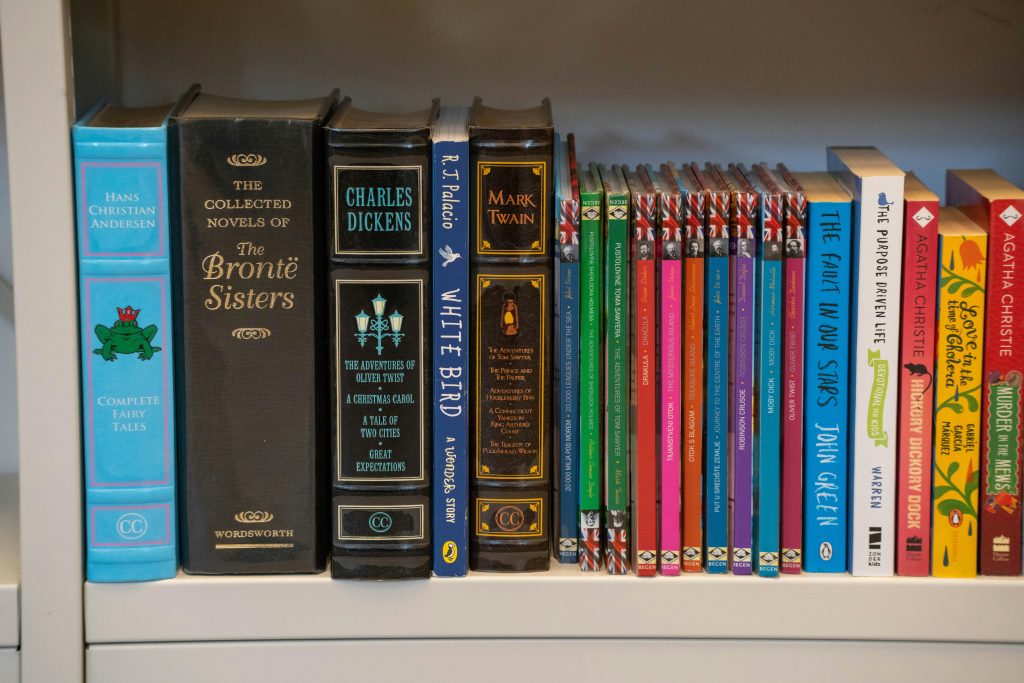
There are several formats your book will be available in. The primary modern-day book formats are hardcover, paperback, digital, and audio. Each format has its unique benefits, and publishing across formats will maximize your book’s potential.
Paperback vs. Hardcover
The two general formats for print books are hardcover and paperback. These are just the two broad categories, and each has subsets for different types of books. Cloverly Children’s will work with you to navigate and perfect these formats when you publish your book.
Hardcover Books
Hardcover books are those that are bound with rigid covers, front and back, with dust jackets. The dust jackets protect the cover from damage to keep them usable in the long term. As such, these are the most durable books and are perfect to stock in libraries and used book stores. Children’s books are also great for hardcover binding to withstand use and rereading.
With durability comes a higher production cost, which in turn leads to a higher retail price. That means that both the publisher and reader will pay more for a hardcover book than a paperback. People will pay for higher quality, especially for high-profile authors and books looking to boost profits. Discounts on hardcover books only come in the resale market or once demand has waned.
Cloverly can publish your book in hardcover upon request. Your book is more likely to sell more paperback copies, but hardcover can be an option to distribute your book.
Paperback Books
Trade paperback is the first type of paperback book, with a soft flexible cover; mass market is the second. The flexibility of paperbacks make them transportable and easy to bring anywhere you go. They are also less resilient to wear and tear, but that is by design.
Paperback books are cheaper to produce than hardcovers, which is translated to the retail price. Readers of all economic statuses can buy these books more than hardcover, increasing overall accessibility.
Trade Paperback
Trade paperbacks are the more common type of paperback, accounting for most book sales. Any bookseller will likely be well-stocked with trade paperbacks for most books on their shelves. While some books are published exclusively in hardcover at first, they almost always are published in a paperback edition later. Just about any genre of book can be published as a trade paperback.
When you publish with Cloverly, your book will automatically be available in trade paperback. Most of your sales will likely be in this format.
Mass Market Paperback
Mass market paperbacks are the alternative to trade paperbacks. They are similar to trade paperbacks, but are often smaller than trade. Therefore, these are even cheaper to produce than trade and are the least expensive books on the market. The typeset in mass market paperbacks is smaller and tighter to accommodate the limited page sizes. This can be seen as less prestigious than larger paperbacks, but they are easier to transport.
However, mass market paperbacks are typically limited to specific genres. Where trade paperbacks can cover nearly any genre, mass market paperbacks are not as open. The most common mass market genres are romance, horror, science fiction, fantasy, and mystery. These often overlap with “pulp” fiction genres.
Digital eBooks
Your book will also likely be available in non-print formats. The primary format is a digital eBook. This is simply the text of your book published through digital markets for use on eReaders. There is little to no additional production cost of an eBook, just posting the digital file for sale. This yields the greatest profit for authors, as more of the sale price is profit.
Some readers are more fond of eBooks because it saves space on the bookshelf. For people who read a lot, this is a huge plus. It also allows people to carry their entire library wherever they go, it just has to be downloaded.
Cloverly will release your book as an eBook to be as accessible as possible.
Audiobooks
The final potential format your book can be released in is as an audiobook. These are full recordings of your book that consumers can listen to instead of physically reading the words. Audiobooks have been around for a long time, but they have become even more popular in recent years.
Audiobooks are the most accessible format because they can be listened to anywhere. Whether in the car, on public transportation, or at home, people can listen to audiobooks as they please. This introduces your book to the largest possible audience.
Professionally-produced audiobooks do require some significant costs. These costs cover a voice actor to narrate the book and audio engineers to produce the finished product. Unless you are a professional, you should never produce an audiobook on your own. You want it to sound as good as possible before it is distributed to online retailers. These costs often result in a higher retail price, but audiobook listeners are devoted.
Cloverly Children’s offers you the opportunity to produce a professional audiobook. If you make your book an audiobook, you can reach the fullest potential audience for your book.
Write with a Co-Author

A Brief Overview of the Perks of Anthologies and Collaborations
Authors do not have to be solitary creatures. While many authors are most known for their solo books, that is far from the only option. There is a whole world of literature out there for people looking to write with others. The main two forms of books published with other authors are anthologies and collaborations. Both have their use when publishing.
There are two main types of an anthology. First, there are books in which multiple authors write short pieces that are published in one collection. These works are either written specifically for the anthology or are put together after the fact. The other option is when previously published material from different authors is compiled into a collection. This can be either contemporary or more classical. The key is that there are separate pieces of writing that are written by and credited to different people. Anthologies are commonly shorter pieces of writing, including poetry, short stories, essays, etc.
Collaborations are also written with at least one other person, but there is rarely distinction in the text between authors. The finished product in a collaborative book is a cohesive whole work. This can be any type of book because it is not multiple pieces put together in a collection.
Anthologies and collaborations can be invaluable options for some writers looking to expand their literary prowess. Writing with others can unlock an author’s true potential. This article will briefly discuss creative and practical uses for anthologies and collaborations.
Bonding with Friends, Family, and Colleagues
One immediate benefit of publishing with others is the ability to bond with others. Often, authors will write with friends, family, colleagues, or others in their community. When you write with people you know personally, the finished product will be more heartfelt. Throughout the lengthy publishing process, you will grow closer with the authors you work with. It can be hard to mix your personal life with professional output, but navigating those waters can help you grow.
Creating a Full-Length Book
Sometimes, writers have an idea for a story that is not long enough to justify being published on its own. This is where anthologies are especially useful. When you have a shorter piece of writing, you can combine your work with others who have similar works. You don’t want the writing to be too stylistically or thematically different, but there can be a healthy variety.
When writing a collaboration, you still want to create a full-length book. Having another person writing with you can help you fill out the story. By bouncing ideas off one another, your text can become richer and more well-rounded. As a solo author, you might struggle to lengthen your idea, and another writer can help with that.
Reach New Audiences
Naturally, authors will enter any sort of collaborative writing with unique audiences. Whether established authors with a fan base or first-time writers, there are always potential readers. When you publish with others, your writing can get in front of new people. Your co-authors will bring their readership to the work. This can be especially beneficial for early-career authors looking to expand their network of readers. More established authors can use their status to provide an additional boost to newcomers to the industry.
Collaborative Children’s Stories
Anthologies can be a good format for children’s stories. An anthology book can include various stories perfect for either young independent readers or younger children at bedtime. These can include as many stories or sections as the authors see fit. Having multiple authors adds a variety of perspectives to the text. Exposing children to multiple points of view will help them expand their worldview.
Anthologies and collaborations are also a perfect avenue for children to start writing. If your child has an idea for a book, you should encourage them to try to write it. You can help them and get their creativity flowing. They may unlock a new passion and become a published author at a young age.
Mutually Beneficial Publishing Process
As any seasoned author will tell you, the publishing process is not easy. Having collaborators to help publish your book will make it so much simpler. From the beginning, a collaborator can help you overcome any financial barriers to publication. They can also be another set of eyes to review the edits your book will receive. There will be numerous details that require approval and input, such as cover art, in-book illustrations, and press releases. Your collaborator will be there with you every step of the way.
Social Media Marketing

How Social Media Maximizes Your Book’s Reach to All Audiences
Social media is one of the most important ways to market your book in today’s digital age. More people are using social media know than ever before, with the numbers only rising. The Pew Research Center found that billions of people use social media every day across platforms.
Over the last two decades, social media use became inescapable in society. Those billions of everyday users are potential readers for your book. It is crucial to master social media to maximize your audience. Consider social media to be part of the publication process. That is how important it is.
This article will provide an overview of using social media to grow your readership. Whether you are a first-time user or seasoned pro, you can master the art of social media.
The Most Popular Social Media Platforms
There are countless social media platforms for any individual interest. The first social media platforms were founded more than 20 years ago, and they have all revolved over the years. Some of the earliest popular social media platforms (like Myspace) have faded in popultarity and prominence. While each platform is unique, they nearly all combine writing, pictures, and videos to connect people around the world.
Pew Research Center conducted research on the American demographics of the most popular platforms. These are YouTube, Facebook, Instagram, TikTok, WhatsApp, Reddit, Snapchat, X, and Threads, Bluesky, and Truth Social. The first eight are used by at least one in five Americans. The last three are less popular but still important in marketing.
Many people use more than one of these, so mastering marketing across multiple platforms is key. These also have crossovers of types of content, mixing photos, videos, and writing to connect people.
Writing-Based Social Media
All social media uses some form of writing and text; the prominence of writing is what varies. The platforms that largely use writing in their content are Facebook, WhatsApp, Reddit, X, Threads, Bluesky, and Truth Social. While some may have started as text-based platforms, they have added new features over time.
On these platforms, users can write posts to share updates with their followers, send direct messages, and comment on posts. When these platforms feature photos, there are often accompanying captions or text.
Visual Media-Focused Social Media
Today, photos are video are staples of social media; every platform has at least some ability to share visual media. In the past few years, social media platforms have been even more crowded with content produced by artificial intelligence. Therefore, the material on social media cannot always be trusted, so proceed with caution.
Instagram was nearly entirely image based when it was founded; it also became a source of video content. Facebook was also an early social media platform for photograph, like people sharing virtual photo albums with their network.
Snapchat is unique in that it is designed to send disappearing photos with others. Users are also able to send videos to others, but they cannot be replayed more than once when sent directly. Snapchat revolutionized social media by introducing a “stories” feature when users share photos and videos available for 24 hours. Once the time expires, they can’t be viewed again. Stories are in just about every social media platform now.
More recently, TikTok was one of the early prominent platforms designed to share videos. TikTok users can create and post short videos for others to scroll through on their feed. These feeds are created by algorithms that are based on what content the user interacts with. Short video scrolling content has been introduced to other platforms, including Facebook and Instagram “Reels.” TikTok is noted for the BookTok community of users who share reading motivation and book recommendations.
Private and Professional Accounts
On social media, users can create either personal or professional accounts. Many people already have personal or private social media accounts, so they can be used for some book promotion. This can be helpful in sharing your book with people in your personal network.
For growing your fan base, you can use a professional account. This can create a more widespread following specifically for your writing. This kind of account can make your profile look more professional and attract a wider range of readers.
Posting on Social Media for Marketing
What you decide to post on social media to market you book is completely up to your discretion. Always tailor your content to the book to ensure that you attract the correct audience. For example, when publishing a children’s book, you might want to gear your content towards parents or teachers.
Some common content to post includes video trailers, links to buy your book, professional art work, or any media appearances. You should post whatever you think would best attract your target audience.
Cloverly Children’s is here to help you start your marketing journey. We know that social media is the most important marketing tool today, especially at your book’s launch. As part of our publishing agreement, we offer a short video teaser to promote your book. You can share this video with your entire social network.
Take advantage of the ample opportunities social media provides for marketing your book. Your potential readers are all out there on social media, you just have to find them.
How to Write Plot Twists and Turns

The Narrative Impact of Plot Twists and Foreshadowing
There is no one correct way to write a book. As an author, you may have a variety of motivations guiding your writing process. Some write as a form of intimate self-expression, others to grow a following. The motivation behind your writing can determine how you write your story. When looking to grow a fan base, writing attention-grabbing books is helpful. You can do this by including plot twists and foreshadowing into your narrative.
Plot twists and foreshadowing are narrative tools that hook readers and make it a more memorable story for them. These tools should not be overdone, but sprinkling them in your text will hook readers. These readers may want to come back for your future books.
When used appropriately and in moderation, these elements will enhance your writing across genres. This article will provide brief definitions and overviews of plot twists and foreshadowing. They are separate and distinct concepts, but plot twists and foreshadowing often interact with the other.
Defining Plot Twists and Foreshadowing
At a basic level, plot twists are when there are surprising or unexpected reveals in a story. Often, these twists will come towards the conclusion of the story to tie plot elements or characters together. Plot twists often linger as the lasting impression a book gives the reader. Sometimes, books, movies, and tv shows are even remembered for their plot twists.
Authors should take caution, however, that a plot twist is not a gimmick. There should be genuine artistic intention and vision when employing plot twists. There can be a fine line in being a gimmick and being an effective twist. Never be afraid to defy expectations, but take caution in going overboard.
Foreshadowing is slightly different. Instead of being a late surprise in the text, foreshadowing is done earlier in the text. This is when an author lays the seeds of a future plot development before it happens. There is no “twist” that is revealed, just future events or reveals hinted at. When something is outright stated, that is not foreshadowing (unless it is that is its own kind of complex foreshadowing). It is up to the author to integrate foreshadowing however they see fit.
Plot twists are not necessarily the payoff of foreshadowing, but they can be. That is why they are independent tools that can overlap if necessary. Without foreshadowing of a plot twist, it is important to recognize that lying to your readers is not a twist. Authors can write in intentionally deceptive or murky ways without completely misleading readers. Any plot twist needs to be justified by the plot, whether through foreshadowing or explaining after the reveal.
Considering Genres
Every genre of book, fiction and non-fiction, can successfully contain both plot twists and foreshadowing. They are not limited to narrative mysteries or crime books. Non-fiction books can integrate foreshadowing by introducing elements that come back in a different way later on. Plot twists can be the result of the real-life twists in someone’s life.
Foreshadowing is natural in detective stories to lay the groundwork for solving a crime. Plot twists, similarly, are expected in these contexts to reveal the criminal’s identity or motivations. However, other fictional stories can reveal secrets in the text. Authors should never feel limited by genres to subvert audience expectations. Even children’s stories can use these literary devices to engage and challenge young readers’ minds.
Integrating Literary Devices Into Your Text
As with any elements of writing, plot twists and foreshadowing must be well-integrated into the text. Readers notice when a book is poorly written. It is unavoidable and takes away from the reading experiences. Bad writing distracts readers, and they will not want to read your future endeavors.
It is always important to make sure readers do not leave your book with substantial questions about your book. Intentional open-ended musings can be a powerful takeaway, but unintentional confusion is not. For plot twists, that means that it must be justified. You do not want to add a plot twist just for shock value. They should make sense in context. Foreshadowing is up to the discretion of the author, but it can be helpful in setting up plot twists. You do not want foreshadowing that is either too obvious or too obscure, but that can be up to readers.
You can include your plot twists and foreshadows at any stage of the writing process. During outlining, you can simply place these and any other literary devices wherever you desire. Then, when you are drafting, you can include it when you write. If you want to change anything after completing your first draft, you can do so during the revision process. The team of professional editors at Cloverly Children’s can help with that process.
Until your book is published, you can make any changes you want. Every round of edits you go through will yield new discoveries about your text. The ultimate goal is for your book to be the best version it can be. That includes having well-done plot twists and foreshadowing to grab readers’ attention until the very last page.
The ABCs of Copy Editing

How Copy Editors Tailor Their Work to Different Genres
A book’s author is the one to put ideas to paper; copy editors are the ones who fine tune it. Without a thorough copy editing process, books would be published with errors and typos from the first page. Even the most acclaimed and highly esteemed writers would never publish a first draft.
Editors of all levels are necessary to make sure every book is ready for publication. There are typically two kinds of editors in the publishing world: general and copy editors. General editors are more focused on guiding the creative process of book writing. They mostly offer suggestions to the author about the content of the book.
Copy editors are there for proofreading, checking that the book is written without significant grammatical or stylistic errors. Instead of looking at the content of the book, copy editors look at how the book is written. An author can have a great idea, but if it is sloppily written, it will not be successful. Good copy editing is invisible; the reader should never be distracted by grammatical errors or typos.
As with every part of the publishing process, copy editors must across a wide array of genres. Namely, fiction and non-fiction books have unique considerations to take into account during the editing process. Much of the actual work is the same, but the copy editor’s approach can be slightly different.
This article will break down the differences in copy editing fiction and non-fiction books. While most readers and authors are not copy editors, understanding their methods smoothens the publishing process.
Understanding the Book
The most important thing for any copy editor to do is to understand the book they are editing. While it is helpful to understand the book’s content, this mostly means comprehending the book’s genre, tone, and intended audience. Each copy editing assignment should be tailored to the book being edited. Appropriately copy editing a book contributes to its future success and readership. It is difficult to market a book riddled with mistakes.
This distinction can often be broken down to fiction and non-fiction books. Each requires slight modification to how one copy edits.
For non-fiction books, the subjects are often more serious and based in facts. There are lighthearted non-fiction books, but if the content is fact based, the text should be treated with care. Non-fiction book genres run the gamut from self-help to spiritual guides to memoirs and beyond. Copy editors should never suggest changes to the meaning of accurate non-fiction books. This could lose the spirit of the text. Therefore, a copy editor may be more limited to strict grammatical checks in their review process for a non-fiction book
For fiction books, the copy editor may have more room for creative input. While not as involved as a general editor, a copy editor can often suggest slightly more substantial changes. This should never change the content of the book from the author’s intention. Fiction covers almost every genre under the sun.
Each specific fiction genre has its own considerations. It is a copy editor’s responsibility to make sure their work is appropriate for the genre. In doing so, they should look at the book’s tones and themes to tailor their editing. The number one priority is making the book accessible to its intended audience.
Reacting to the Characters and Dialogue
Nearly all books, even non-fiction ones, have characters. In this context, a character is just who is being written about in the book, whether real or imagined. Copy editors should always be respectful to the author’s intention with their characters.
For non-fiction, the characters are likely to be real people, or inspired by real people. As such, there is less wiggle room for changing their characterization or dialogue. If someone said something in real life, that cannot be changed. A copy editor’s work here will be focused strictly on grammatical concerns.
For fiction books, a copy editor can have more of an active role. Sometimes, a copy editor can suggest alterations to the text to make dialogue flow smoother. Or, they can suggest minor thematic adjustments to ensure consistency. All work must be in conjunction with the author to ensure the author’s intent is never lost, just clarified.
Working Across Genres
No matter the genre, copy editors have a similar task. The ultimate goal is to make the book as readable and error-free as possible. This is the industry norm that all professional copy editors understand. This includes checking for grammatical errors, typos, misspellings, and formatting and style inconsistencies. Authors can purposely deviate from these norms, and the copy editors should be in the loop. Consistency is the key.
With Cloverly Children’s, our team of professional copy editors will thoroughly review your book from start to finish. We adhere closely to the Chicago Manual of Style, the industry norm. We never use artificial intelligence to review your book because we understand the importance of the human touch. You worked hard writing your book, and we want to make it the best version it can be.
Writing a Book? No AI Necessary!
Limiting AI Use in the Publishing World
It is nearly impossible to avoid artificial intelligence (AI) in the modern media landscape. For better or for worse, AI is everywhere. Some love it, some hate it. Either way, there are serious considerations to take into account when considering the role of AI in publishing.
People use AI for a wide range of purposes, both in and out of creative spaces. However, AI is a tool with a sinister side. Some people use it to assist with overbearing workload with overwhelming data. Others use it as a shortcut to replace their creativity. The pros and cons of AI are dependent on its individual uses.
Even though AI has gotten stronger and more human-like in recent years, everyone should still exercise caution. AI should never fully replace any creative project, including in the publishing world. Art is as powerful as it is because it comes from the human mind, not a computer’s code. Publishers should set a clear example with their authors for use of AI in writing and releasing books.
Two Types of AI
All AI is powered by computer programming. Within that broad horizon, there are two general categories of AI commonly used. They are each used for different purposes and play different roles in society.
Generative
The first type of AI is generative. This is artificial intelligence that generates new content based on an inputted prompt. This can include pictures, text, videos, and any other physical product. Generative AI is a hot topic because it has a high potential to produce incorrect or misleading information. AI chat bots—including ChatGPT, Google Gemini, Claude, etc.—are also examples of generative AI.
In the literature world, this means a computer creates the text or illustrations of a book. Sometimes, it is obvious when AI is used, resulting in “AI slop.” AI can have recognizable features that become easily identifiable by some eagle-eyed consumers. Other times, it can be convincing and truly convince people a human created it. This is a slippery slope because that information could be incorrect and be used for nefarious purposes.
Non-Generative
The second type of AI is general and non-generative, which plays a more traditional analytic role. Instead of creating new material, it analyzes and processes existing content for a specific purpose. For example, in highly complex data sets, AI can be used to sort the information and find trends. This is less common in publishing, but it can be utilized in book editing software.
Human Creativity Rules All
No matter how lifelike a piece of generated AI material may seem, it inherently lacks a human touch. Sure, a person does have to create the prompt that generates the content, but the result is machine-made. There is no replacing the human mind’s potential for creative excellence.
Before the last couple years, almost all media was crafted and produced by the human mind. Even imperfections in a piece of art can be noteworthy. People use programs to create (like with 3D-animated films), but a person is always in charge. People use the tools to directly design art. Even with animation software, for example, artists can add their flair to a project. That is gone with AI, no matter how many prompts you enter to get your desired result.
The same goes for writing a book, especially one targeted towards children. Some of the most classic children’s books are remembered for their memorable illustrations and charming characters. AI simply cannot create art like that. AI “learns” how to generate material from already-existing content, so nothing truly original can come from it. AI is limited by its technical parameters; the human mind is infinite.
Minimizing AI in the Publishing World
For the reasons above, AI should be used as sparingly as possible when writing a book. If needed, it can provide general guidance for outlining, but that should be the limit. Publishers should also minimize its use throughout the process and always review any AI output. Over-reliance on AI can diminish the reputation of both publishers and authors.
At Cloverly Children’s, we make sure every step of the publishing process is guided with a human touch. All of our books are edited by professional copy editors who thoroughly review each book. And all of our illustrations are hand crafted by our team of illustrators. Real people even the press releases we release after your book is published. You are in control of every step of your publishing journey, and nothing is finalized without your approval. Human creativity is the backbone of the literary world.
Never Shy Away from Criticism
How Critical Feedback Will Help Your Writing
Nobody knows your writing quite like you do. You spent so much of your creative energy crafting your book to be exactly what you imagine. Naturally, when you share it with others, you want everyone to love it. However, the truth is that people have different tastes. Even the most beloved stories of all time have critics.
As an author, instead of hiding from criticism, you should embrace it in all its forms. Even when you disagree with certain feedback, understanding other perspectives is crucial. You will develop as a writer when you take time to process all the feedback you receive. This article will discuss several ways in which this is beneficial in the long term.
Critiques from Your Friends and Family
Even before your book is published, you might share it with friends and family. These are the people in your life who you trust the most. They also know you better than strangers who read your book. Therefore, they will likely offer feedback that is more honest and personalized to your relationship with them.
Embrace feedback from those closest to you. No piece of writing is going to be perfect and universally beloved. Allow these critiques to inform your future as a writer, either for this specific work or in the future. Your friends and family know you as a person, which can guide their feedback to you as an author.
It may not be natural to accept criticism. In fact, it can be much easier to push back against negative feedback. You may want to defend your work. Of course, you can disagree with criticism, but always make sure you understand the intention behind it. Be confident in your work without being overly arrogant and defensive.
Your Writing Can Be Subject to Interpretation
You may think you understand everything about your own writing, but people can interact with it in different ways. Readers may approach your writing with different perspectives. Their pre-existing opinions and biases can shade their feedback to your work.
It is important to understand that everyone approaches all art differently. Understanding different perspectives on your work can teach you about yourself as both a person and a writer. After fully digesting criticism you receive, you can look back at your work with a fresh perspective. Art is a medium that is always evolving, and as such, perspectives on it shift and adapt.
Evolving Your Writing
Your writing style will always be unique to you. Nothing can ever change the stories you choose to share with the world. However, receiving feedback from others can polish your writing in unexpected ways. Maybe you use phrases or allusions that some find confusing. Or maybe you tend to include excessive run-on sentences in your prose. Maybe your characters’ motivations are not clear in the text. No matter what, getting feedback can make your writer stronger to adapt to the tastes of others.
Writing always comes down to personal preference. However, you can still adapt to be more accessible to others. Or not, because it is always up to you. Understanding different perspectives is important in all aspects of life, especially when strengthening your writing. Your book should be true to your original vision, but it is helpful if others can appreciate it as intended. Whether you make edits to your current work or future ideas, embrace others’ opinions.
The Big Picture of the Publishing World
Writing is an art form, and there is no one way to do it. Everyone’s individual process is unique and personal to them. However, the overall publishing process across the industry has to accommodate each and every author. Therefore, criticism you receive throughout the writing process can help you understand the big picture of the industry.
Writing your book is far from the end of your journey as an author. You will receive feedback at every step of the process. You cannot let any negative critique of your work deter you from publishing your book with the world. Writers grow with criticism, as it allows you to adjust yourself. Never lose track of yourself and use all the feedback you receive to become the best artist you can be.
Reading for Your Mental Health

Reading Books to Boost Your Family’s Mental Health
People like to read for numerous reasons. Sometimes, books help readers escape into new worlds previously unreachable to them. Others use reading to learn about real-life figures or dig deeper into history. In addition, children and families can use books as both entertainment and education during a child’s development.
If it seems like reading soothes one’s stress or makes them feel better, that is because it does. Research studies have concluded that reading increases brain activity and benefits one’s mental health. In other words, reading has a biological effect on one’s brain. This effect is even used by some therapists or mental health providers through bibliotherapy, which uses reading in therapy.
Families can use books to support their children’s emotional and physical well-being. It is also a creative outlet to teach children as they grow up. Any book can achieve these effects, running the gamut of genres and subjects. This article digs deeper into some of the ways that reading improves one’s mental health.
Stress Relief
After a long, stressful day, winding down with a book is great way to decompress. Imagine reading a book in bed or in your living room. After a day of using your brain at work, reading uses your brain in a more creative, introspective way. Reading uses your brain, just in a different, more relaxing way. Of course, everyone’s individual stressors are unique and specific to them, but this is a general conclusion.
In particular, children experience new and ever-evolving shifts in social and environmental dynamics that can cause stress. Therefore, reading is a perfect solution for many children. Books can teach children important lessons, social norms, and endless creativity. This can be books that are explicitly about coping with stress and anxiety or any engaging fiction story. Illustrated books are particularly helpful in using literature to relieve stress.
For older readers and adults, any form of fiction or nonfiction can be used to relieve stress. Fiction of any genre can be a creative outlet, from steamy romances to dramatic family dramas to tense thrillers. There is no accounting for taste when it comes to recreational or therapeutic reading. Nonfiction allows readers to learn more about the world and people around them. No matter the type of book or genre, the act of reading helps relieve stress for audiences of all ages.
Inspirational Reading
Reading can help inspire change in people’s lives, enhancing mental health in a more indirect way. Having a guide or reference book for some of life’s biggest struggles is invaluable for some people. A straightforward seld-help guide is a great first step for handling almost any struggle in one’s life.
However, using books for life guidance needs to be safeguarded. You always want to make sure that the sources are offering actual guidance and will not harm you. Books can inspire immense personal growth in all readers brave enough to seek them out. Make sure these books are properly tailored to the intended use.
Building Perspective
Another indirect effect of books on one’s mental well-being is gaining a well-rounded perspective on life. This can also come from any genre, so long as it opens up some new way of life. Seeing others’ lives can change how someone sees their own life. There are books for everything, sharing every way of life. There will always be something that puts one’s own struggles into perspective.
Social Skills
Many readers, especially children, can use books to build one’s social skills and relationships. Any book with interpersonal dynamics can be presented as an example for building social skills and increasing cultural awareness. Even if not intended, simply reading new dynamics can help the reader strengthen their social skills. Doing so will create less anxiety or tension with other people, therefore helping mental health. The less interpersonal strife, the better.
Writing for Mental Health
Reading can inspire someone to want to write their own book. Writing is a common form of therapy or mental unloading to boost mental health. Whether inspiring someone to write a book for the world or just a personal journal, reading raises awareness.
If you write a book for distribution, there are ways to get your book out to the masses. Publishing with companies like Clovely gives you the freedom to write and publish the book of your dreams. The book you write can be the one that inspires someone else to begin their mental health journey.